
 7 hours ago
9
7 hours ago
9
ARTICLE AD BOX
Gordon CoreraSecurity analyst

 Getty Images
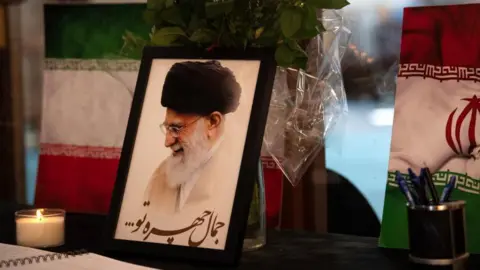
The attack that killed Iran's Supreme Leader came not in the middle of the night, as might have been expected, but in the middle of the morning.
That was because the US and Israel decided to take advantage of a piece of crucial intelligence that had arrived hours before.
For months, they had been watching for a moment of opportunity when senior Iranian figures might be meeting and they learnt Supreme Leader Ali Khamenei was going to be at a compound in central Tehran on Saturday morning.
They also had a fix on the location of other senior military and intelligence figures meeting at the same time.
For months the US and Israel had been tracking the Supreme Leader's movements. The exact methods they used are secret although President Donald Trump in a social media post did hint at them.
"He was unable to avoid our intelligence and highly sophisticated tracking systems."
This could have been a human source reporting back but it may be more likely to be technical tracking of Iranian individuals.
 Getty Images
Trump and his team monitored events from a makeshift war room in Mar a Lago
In the 12-day war last June, Israel targeted scientists and officials linked to Iran's nuclear programme and was reported to have been using penetration of telecoms and mobile phone systems to understand the movement of individuals.
That included sometimes tracking the movements of bodyguards who were linked to key officials.
Over the long term, this can help build up a "pattern of life" to predict and understand activity as well as search for moments of vulnerability.
Iran knew the Supreme Leader was in the sights of its enemies and so the failure to identify and deal with these vulnerabilities in the intervening months suggests a deep failure for Iranian security and counterintelligence or else the ability of Israel and the US to continue to adapt their methods to find new ways of tracking.
The Iranians may also have calculated that a daylight attack was less likely.
In this case the intelligence, the New York Times says, came from the CIA but was passed on to Israel to carry out the actual strike.
The signs are that there is a division of labour with Israel focusing on strikes to hit leadership targets and the US more on military targets.
Crucially the intelligence provided enough forward notice of the Supreme Leader's movements and those of other officials to be able to plan an attack using jets which could fire long-range missiles.
Rather than a single decapitation strike, the plan was for this attack to signal the launch of a wider campaign and it was moved forward to take advantage of the window of opportunity.
It can take around two hours for Israeli jets to reach Tehran but it is not clear how far off they fired their munitions.
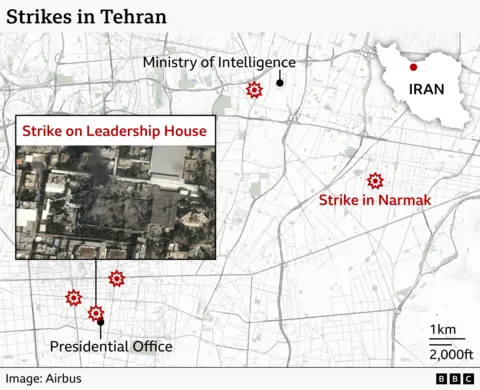
When the decision was taken, Israeli jets are reported to have used 30 bombs to attack the compound around 9:40 local time.
Videos shared online show aftermath of strikes
This may have been because the Supreme Leader was still using an underground bunker below the compound for his protection (though not reportedly some of the deepest that the regime has).
Multiple munitions may have been needed to burrow deep enough to be sure of striking the target.
Other sites in the Iranian capital were also hit, including the office of President Masoud Pezeshkian who later put out a statement and said he was safe.
Israel has named seven senior Iranian defence officials as among those killed, including Iran's Defence Council secretary Ali Shamkhani, Defence Minister Brig Gen Aziz Nasirzadeh and IRGC commander Gen Mohammad Pakpour.
When the jets stuck, it was the middle of night at Mar a Lago in Florida where President Trump had gathered along with some of his top officials to monitor events.
It would take hours before confirmation came that the Supreme Leader had been killed.
Iran had been prepared for this possibility though, with reports that the plans for succession for not just the Supreme Leader but also an array of senior officials had been put in place.
That means it is not yet clear what the killing will mean for the course of this conflict.





 English (US) ·