
 2 hours ago
1
2 hours ago
1
ARTICLE AD BOX

 Getty Images
The US Department of Justice (DoJ) has said it has released all of the files required by the Epstein Files Transparency Act, but lawmakers have argued the release is insufficient.
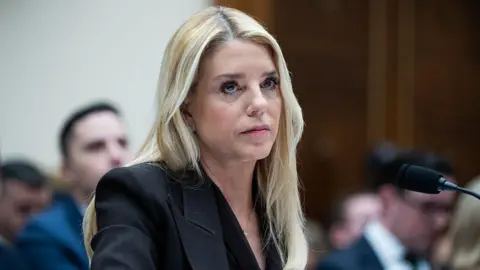
The letter sent to members of the US Congress on Saturday from Pam Bondi and Todd Blanche said all documents in the possession of the DoJ had been released and provided a list of names contained in the files.
Kentucky Republican Representative Thomas Massie, who co-wrote the law, called for the DoJ to also release internal memos outlining past decisions on whether to charge Epstein and his associates.
Millions of new files relating to the late sex offender Jeffrey Epstein were released by the DoJ earlier this month.
In the letter, Attorney General Bondi and her deputy Blanche wrote: "In accordance with the requirements of the Act, and as described in various Department submissions to the courts of the Southern District of New York assigned to the Epstein and Maxwell prosecutions and related orders, the Department released all 'records, documents, communications and investigative materials in the possession of the Department' that 'relate to' any of nine different categories."
No records were withheld from the DoJ's release "on the basis of embarrassment, reputational harm, or political sensitivity", the letter added.
The individuals listed in the letter include people who "are or were a government official or politically exposed person", and whose name appeared at least once in the files, the letter says.
The names appear in the files in a "wide variety of contexts", including some people who had "extensive direct email contact with Epstein or Maxwell" and others who were merely referenced in documents or news articles contained in the files, Blanche and Bondi wrote.
 Getty Images
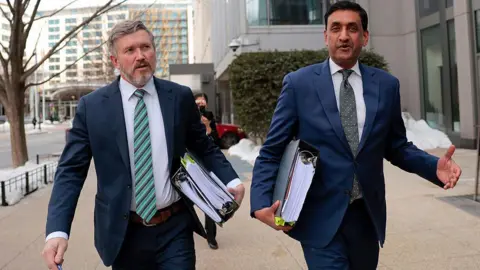
Lawmakers Thomas Massie and Ro Khanna are calling for justice department to release more Epstein files
Donald Trump, Bill Gates, Andrew Mountbatten-Windsor, and Bill Clinton - who are included in the list - all had documented past relationships with Epstein and Maxwell. There is no suggestion that appearing in the documents implies any wrongdoing and each has denied any involvement in Epstein's crimes.
But the list also includes the names of deceased musicians Janis Joplin and Elvis Presley.
The letter was addressed to the Senate Judiciary Committee's chairman Chuck Grassley and ranking member Dick Durbin, as well as the House Judiciary Committee's chairman Jim Jordan and ranking member Jamie Raskin.
In an interview on ABC This Week on Sunday, Massie argued that, even though the DoJ "wants to say they are done with this document production", there are more crucial files that should be released.
The DoJ was "signing deliberative process privilege in order not to release some of the documents", he said.
"The problem with that is the bill that Ro Khanna and I wrote says that they must release internal memos and notes and emails about their decisions on whether to prosecute or not prosecute, whether to investigate or not investigate."
In response to the letter, California Democratic Representative Ro Khanna, who co-wrote the Epstein Files Transparency Act, accused the DoJ of "purposefully muddying the waters on who was a predator and who was mentioned in an email".
"To have Janis Joplin, who died when Epstein was 17, in the same list as Larry Nassar, who went to prison for the sexual abuse of hundreds of young women and child pornography, with no clarification of how either was mentioned in the files is absurd," Khanna wrote on X on Saturday.
"Release the full files," he added. "Stop protecting predators. Redact only the survivor's names."
The BBC has contacted the Department of Justice for comment.
US lawmakers previously said files on Epstein were improperly redacted ahead of their release, leading to at least one document being unredacted after their criticism.
Lawyers for Epstein's victims have also said the latest tranche of files included email addresses and nude photos in which the names and faces of potential victims could be identified.
At the time, the DoJ said mistakes were due to "technical or human error" and they had taken down all the flagged files.






 English (US) ·